Porcelain Veneers in Muwailih and Ras Al Khaimah
Porcelain veneers are a cosmetic dental service designed to improve the appearance of the smile by covering the front surface of selected teeth with thin, custom-made ceramic shells. Patients may consider veneers when they have deep stains that do not respond well to whitening, small gaps between front teeth, worn edges, uneven tooth length, minor shape concerns, or a smile that does not look as balanced as they would like. However, veneers are not simply about choosing a white shade. They require examination, planning, smile design, and careful assessment of the teeth and gums.
At Basmat Al Hayat Medical Center, we provide porcelain veneers as part of our cosmetic dental services at our Muwailih – Sharjah and Ras Al Khaimah branches. The visit starts with an examination of the teeth, gums, bite, natural tooth shade, smile line, and the patient’s expectations. The dentist then explains whether porcelain veneers are suitable, or whether another option such as teeth whitening, polishing, cosmetic bonding, fillings, crowns, or orthodontic care may be more suitable.
Porcelain veneers can help improve the appearance of front teeth, but they are not suitable for every patient. If there is active tooth decay, gum inflammation, heavy teeth grinding, weak enamel, or bite problems, these concerns may need to be managed before veneers are considered. The aim is not only to make the smile look better, but also to choose a solution that respects the health of the teeth and gums.
What Are Porcelain Veneers?
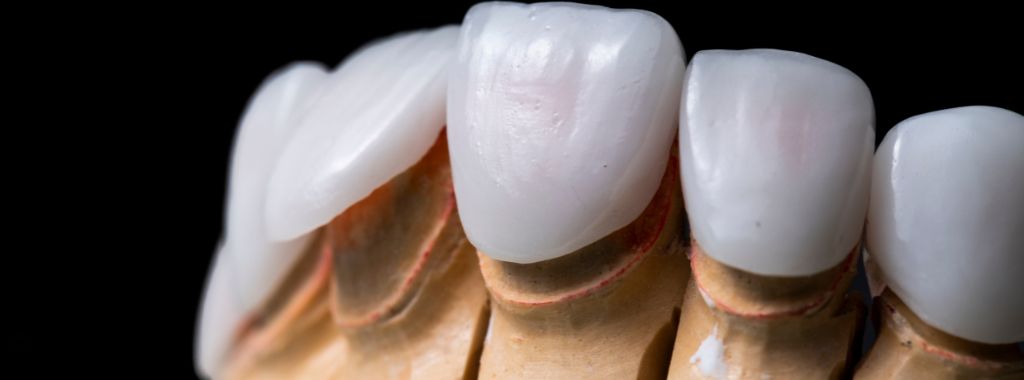
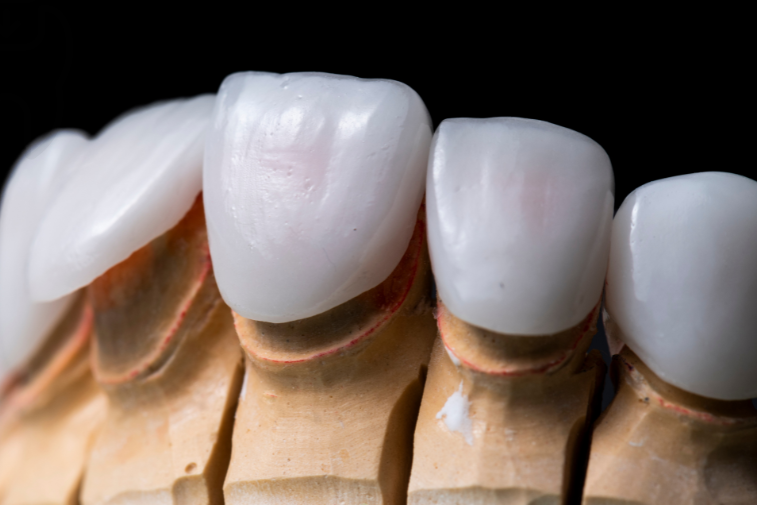
Porcelain veneers are thin ceramic coverings made to fit the front surface of teeth. They are designed to improve the visible shade, shape, size, and symmetry of the teeth, especially the front teeth that show when smiling and speaking. Each veneer is designed according to the patient’s tooth measurements and smile plan, then bonded to the tooth surface using suitable dental materials.
Veneers are different from dental crowns. A crown usually covers most or all of the tooth and is often used when a tooth is weak, broken, heavily filled, or needs protection after
root canal treatment. A veneer usually covers the front surface and a limited part of the tooth, making it a more cosmetic and conservative option in selected cases. However, some veneers may still require slight enamel preparation depending on the tooth condition and the planned result.
Patients should understand that porcelain veneers require careful planning and may be irreversible in some cases if enamel is removed. This is why the decision should not be made quickly or based only on a photo of someone else’s smile. The dentist explains the benefits, limitations, and alternatives before treatment begins.
When May You Consider Porcelain Veneers?
Porcelain veneers may be suitable for several cosmetic concerns, especially when the teeth and gums are generally healthy but the visible smile needs improvement. Patients may book a consultation for veneers in situations such as:
- Deep discoloration that does not improve enough with teeth whitening.
- A visible color difference in one or more front teeth.
- Small gaps between front teeth.
- Worn or uneven tooth edges.
- Small teeth or teeth that do not look balanced in the smile.
- Minor chips or cosmetic cracks in front teeth.
- A desire to improve the overall smile appearance.
- Mild shape irregularities that do not require orthodontics according to the dentist’s assessment.
Having one of these concerns does not mean veneers are the only solution. If the desired change is simple, whitening or cosmetic bonding may be enough. If there is crowding, spacing, or tooth movement that affects the bite, orthodontic care may be more suitable. The dentist discusses the goal, the current condition, and the best available options after examination.
Who Is a Suitable Candidate for Porcelain Veneers?
A suitable candidate for porcelain veneers usually has front teeth that are reasonably healthy, stable gums, enough enamel, and no major bite problem or uncontrolled teeth grinding. The patient should also have realistic expectations. Veneers can improve smile appearance, but they do not make every smile identical and they do not treat every dental problem.
Some patients may need treatment before veneers. This may include
teeth cleaning, gum treatment, fillings for cavities, root canal treatment for damaged teeth, or teeth whitening if the patient wants the surrounding natural teeth to be lighter before veneer shade selection. If the gums are inflamed or bleed easily, it is usually better to stabilize gum health before starting veneers because gum condition affects the final margins, comfort, and appearance.
If the patient grinds or clenches their teeth at night, the condition needs special evaluation. Strong pressure can affect veneers and may increase the risk of chipping or debonding. In some cases, the dentist may recommend a night guard after treatment to help protect veneers and natural teeth.
Cases That May Not Be Suitable for Veneers Immediately
Not all teeth are ready for porcelain veneers immediately. If a tooth has active decay, a very large filling, or a deep fracture, it may need restorative treatment such as a crown instead of a veneer. If teeth are mobile due to gum or bone problems, gum treatment should come first. If the patient has a very strong bite or severe grinding, a protective plan may be needed before veneers.
Veneers do not treat bad breath, gum disease, tartar, cavities, or tooth pain. It is not recommended to start a cosmetic service before treating active dental problems. Veneers also do not move teeth in the way orthodontic treatment does. They cannot correct every case of crowding, protrusion, or bite imbalance. If tooth position is the main issue, orthodontics or a combined plan may be discussed.
Some patients request a very bright white shade that may not suit their skin tone, face, or remaining natural teeth. The dentist’s role is to explain that a natural and balanced result often looks better than an overly white shade. Shade selection should be part of smile design, not only a choice of the brightest color.
Porcelain Veneers vs. Teeth Whitening
Teeth whitening is designed to lighten the shade of natural teeth. It does not change tooth shape, size, or edge alignment. If the main concern is general yellowing of natural teeth, whitening may be the first option. If the patient has deep stains that do not respond well to whitening, or wants to change tooth shape, size, and small spaces, porcelain veneers may be considered after examination.
Veneers can change both shade and shape, but they require design, preparation in some cases, and bonding. They may also involve a long-term commitment. For this reason, veneers should not be used as a quick replacement for whitening when whitening is enough. The dentist may recommend whitening first if the patient wants to lighten the surrounding natural teeth before choosing the final veneer shade.
This difference is important for smile planning. For example, if veneers are placed on a few front teeth without considering the shade of the surrounding teeth, the final smile may show a visible mismatch. The full smile should be evaluated, not only one tooth.
Porcelain Veneers vs. Cosmetic Bonding
Cosmetic bonding, also known as composite bonding, can be used to repair small chips, close tiny gaps, or improve the shape of one tooth in selected cases. It is often done directly at the clinic and may require less tooth preparation. However, composite can stain or wear over time more easily than porcelain depending on the patient’s habits and the case.
Porcelain veneers often provide a more stable appearance in terms of shade, shine, and surface texture. They may be suitable when the patient wants a broader smile change. However, they require more planning, may take more visits, usually cost more, and may need tooth preparation. There is no single best option for every patient. The choice depends on the goal, tooth condition, budget, expectations, and dentist’s assessment.
The dentist may discuss both options if the case allows. In some situations, bonding is a more conservative choice. In others, veneers may offer better harmony for a full smile plan.
Porcelain Veneers vs. Dental Crowns
Porcelain veneers usually cover the front surface of the tooth, while crowns cover most or all of the tooth. Veneers are commonly used to improve appearance when the teeth are still strong enough. Crowns are used when teeth are weak, broken, heavily filled, or need stronger protection after root canal treatment.
If a tooth is severely damaged, a veneer may not provide enough protection. A crown may be more suitable. If the tooth is healthy and only needs cosmetic improvement, a veneer may be a more conservative option than a full crown. The dentist decides after checking remaining enamel, tooth strength, bite, old fillings, and gum condition.
Patients should not choose veneers or crowns based only on the name of the treatment. Each option has its purpose. Choosing the wrong option may lead to discomfort, poor appearance, or reduced long-term suitability.
Steps for Getting Porcelain Veneers
The exact steps may vary depending on the type of veneer and the technology used, but veneer treatment usually follows an organized process.
1. Teeth and Gum Examination
The dentist examines the teeth, gums, and bite to confirm there is no active decay, gum inflammation, or problem that should be treated first. The dentist also listens to the patient’s goal: a brighter shade, improved tooth shape, closing small gaps, or a more balanced smile.
2. Smile Analysis and Cosmetic Planning
The dentist evaluates tooth shape, smile line, skin tone, face shape, lip position, and how the teeth appear when speaking and smiling. This helps create a smile that suits the patient instead of copying an unnatural design.
3. Cleaning or Dental Treatment Before Veneers
The patient may need teeth cleaning, gum care, fillings, or other treatment before veneers. If teeth whitening is needed before veneers, the dentist explains the correct timing so the final veneer shade can be selected after the natural teeth settle.
4. Tooth Preparation When Needed
In some cases, the dentist removes a very thin layer of enamel so the veneers can fit naturally and not look bulky. The amount of preparation depends on the tooth condition, veneer type, and planned result. In other cases, minimal-prep or no-prep veneers may be possible if the case is suitable.
5. Impressions or Digital Scan
After planning or preparation, impressions or a digital scan are taken depending on the available workflow. These records are used to design veneers that fit the teeth, bite, and smile.
6. Temporary Trial or Smile Mock-Up When Needed
A mock-up or temporary trial may be used to help the patient preview the expected shape. This can help adjust tooth length, contour, and smile balance before the final veneers are made.
7. Bonding the Final Veneers
When the final veneers are ready, the dentist tries them on and checks shade, shape, margins, and patient comfort. Once approved, the veneers are bonded using special dental materials. The dentist checks the bite and provides aftercare instructions.
Is Getting Porcelain Veneers Painful?
Porcelain veneer treatment is not usually painful. Local anesthesia may be used if tooth preparation is needed or if the patient is sensitive. Some patients may feel temporary sensitivity after preparation or after bonding, especially with cold or hot drinks. The level of sensitivity varies from one patient to another.
If veneers are no-prep or very minimal-prep, the visit may feel easier. If the case requires more preparation, gum treatment, or fillings before veneers, the plan may take several stages. Comfort depends on tooth condition and the amount of preparation needed.
If sensitivity continues or if the patient feels pain when biting after veneers are placed, the dentist should review the case. Sometimes the bite needs a small adjustment, or the patient needs specific instructions during the first days. Persistent pain should not be ignored.
Are Porcelain Veneers Permanent?
Porcelain veneers can last for many years with good care, but they do not last forever. They may need maintenance, repair, or replacement over time because of wear, chipping, gum changes, decay around margins, or changes in the patient’s smile needs. Longevity varies depending on oral hygiene, bite force, teeth grinding, eating habits, and regular dental visits.
If enamel is removed during preparation, the patient will usually need veneers or another restoration on those teeth in the future. This is why the patient should understand the commitment before starting. Veneers are not temporary like
teeth polishing or whitening. They are a cosmetic treatment that needs maintenance and follow-up.
Regular checkups are important after veneers. The dentist checks the margins, gums, bite, and any early signs of chipping or debonding. Early review helps manage problems before they become more serious.
How to Care for Porcelain Veneers
Caring for porcelain veneers is similar to caring for natural teeth, but with extra attention to margins and gums. General care tips include:
- Brush twice daily with a soft toothbrush and suitable toothpaste.
- Clean between the teeth with floss or tools recommended by the dentist.
- Avoid biting ice, hard nuts, or hard objects with front veneers.
- Do not use teeth to open packages or cut objects.
- Reduce smoking and drinks that may stain the margins.
- Contact the dentist if a veneer feels loose or if biting feels uncomfortable.
- Use a night guard if recommended due to teeth grinding.
- Keep regular checkups and professional cleaning appointments.
The porcelain surface may resist stains well, but the natural teeth and gums around veneers still need care. If plaque builds around the margins, gum inflammation or decay under the veneer edges may occur.
Common Mistakes About Porcelain Veneers
One common mistake is thinking veneers are suitable for everyone who wants a white smile. In reality, veneers need suitable teeth and gums, and they may not be the best option if the concern can be managed with whitening, orthodontics, or simple bonding. Choosing an extremely white shade can also make the smile look unnatural if it does not suit the face.
Another mistake is thinking veneers do not need care because they are made of porcelain. Veneers still need daily cleaning and regular checkups. The natural tooth and gum around the veneer can still develop problems. Veneers may also chip if used to bite hard objects or if grinding is not controlled.
Another important mistake is having veneers placed by unqualified providers without a full dental examination. Any procedure that bonds material to teeth and affects enamel and gums should be performed by a licensed dentist after proper assessment. Poorly planned or poorly bonded veneers may cause pain, gum inflammation, bad smell, or tooth damage.
Porcelain Veneers Before Special Occasions
Some patients consider veneers before a wedding, photoshoot, or important family event. Veneers may be suitable for improving the smile, but they should not be left until the last moment. Veneer treatment needs examination, planning, preparation, design, and review. Some patients may also need cleaning, whitening, gum care, or fillings before starting.
If you have an upcoming event, it is better to book an examination early. The dentist can explain whether veneers are realistic within the available time. In some cases, whitening or polishing may be a faster option if the event is very close. If the goal is a wider smile transformation, veneers may need more time to achieve a balanced result.
Early planning reduces pressure and allows details to be adjusted before the final veneers are bonded.
Porcelain Veneers as Part of Cosmetic Dental Services
Porcelain veneers are connected to several other services within cosmetic dentistry. Some patients may need
Zoom teeth whitening or
laser teeth whitening before veneers. Others may need teeth cleaning or polishing before smile design. Veneers may also connect with treatment services such as fillings or crowns if some teeth need restoration before cosmetic work.
Internal linking between these services helps patients understand the full smile improvement journey, from examination and goal setting to shade selection, shape design, and the final treatment plan. It also helps search engines understand how cosmetic dental service pages are related to each other.
Why Choose Basmat Al Hayat Medical Center for Porcelain Veneers?
At Basmat Al Hayat Medical Center, porcelain veneer treatment starts with a full assessment of the smile, teeth, and gums, not just choosing a shade from a picture. The dentist explains whether veneers are suitable, what alternatives may be simpler or more conservative, and what steps may be needed before and after placement.
The service is available as part of our cosmetic dental services at our Muwailih – Sharjah and Ras Al Khaimah branches. Having other services such as teeth whitening, teeth cleaning, teeth polishing, fillings, crowns, and dental X-rays available at the center helps complete the plan if preparation or treatment is needed before veneers.
Basmat Al Hayat Medical Center Branches
Muwailih Branch – Sharjah
Sheikh Khalifa Street, Muwailih Commercial
Customer Service: 065597444
Reception: 0544449500
Working Hours: Saturday to Thursday, 9:00 AM to 9:00 PM
Ras Al Khaimah Branch
Al Dhait Area – Agencies Street
Customer Service: 072222256
Reception: 0506462004
Working Hours: Saturday to Thursday, 9:00 AM to 9:00 PM
Friday: 12:00 PM to 8:00 PM
Booking a Porcelain Veneers Appointment
If you want to improve your smile shape, have deep stains, small gaps, uneven edges, or front teeth that do not match your preferred shade or shape, you can contact Basmat Al Hayat Medical Center to arrange an examination at our Muwailih or Ras Al Khaimah branch. After the checkup, the dentist will explain whether porcelain veneers are suitable or whether another option such as whitening, polishing, cosmetic bonding, or orthodontic care may be better for your case.
Porcelain Veneers FAQ
Are porcelain veneers suitable for everyone?
No. The dentist needs to examine the teeth, gums, and bite and check for decay, gum inflammation, or strong teeth grinding before recommending veneers.
Do veneers require shaving the teeth?
Some cases need slight enamel preparation so the veneers fit naturally. Other cases may be suitable for minimal-prep veneers. The dentist decides after examination.
Do porcelain veneers whiten teeth?
Veneers cover the front surface of selected teeth and can improve the visible shade. They do not whiten the surrounding natural teeth, so whitening may be discussed before veneers when suitable.
Can porcelain veneers be removed?
If enamel has been prepared, veneers may not be fully reversible. The teeth may need veneers or other restorations in the future.
How long do porcelain veneers last?
Longevity varies depending on care, bite, grinding, and lifestyle. There is no guaranteed duration for every patient. Regular follow-up helps maintain them.
Do porcelain veneers stain?
Porcelain resists stains well, but the margins, gums, and natural teeth around veneers still need cleaning to prevent plaque and discoloration around the edges.
Are veneers better than whitening?
Not always. Whitening may be better when the goal is only to lighten natural tooth shade. Veneers may be suitable when both shade and shape need improvement. The dentist decides after assessment.
Can veneers be placed on one tooth only?
In some cases, yes. However, matching one veneer to surrounding natural teeth requires careful shade and shape planning. The dentist explains whether one tooth is enough or a wider plan is needed.