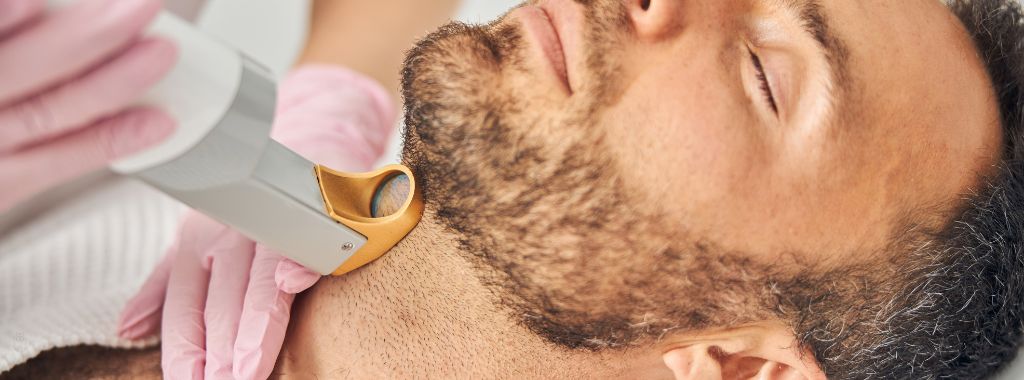
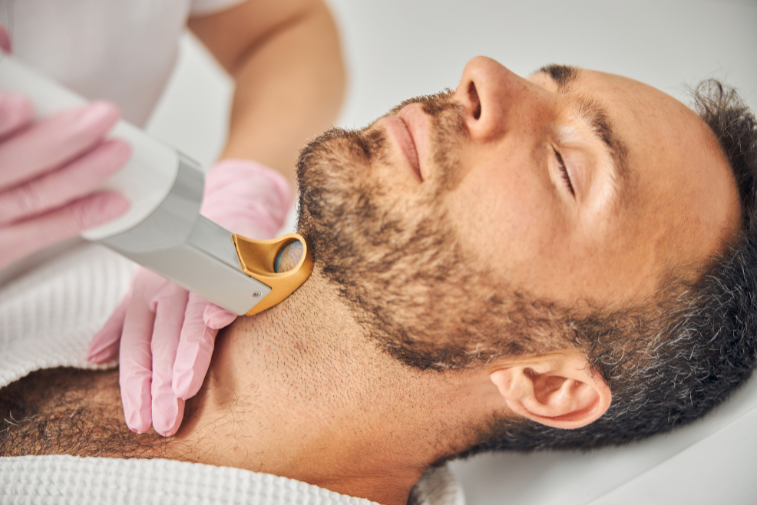
Beard laser shaping is a laser service designed to help men define beard borders and reduce unwanted hair around the beard line. Many men want a cleaner cheek line, a more organized neck line and less frequent shaving around the edges of the beard. Traditional shaving, threading or waxing can cause irritation, bumps, dark marks or ingrown hairs, especially for men with thick or curly hair.
At Basmat Al Hayat Medical Center, we provide beard laser shaping as part of our laser hair removal services at our Muwailih – Sharjah and Ras Al Khaimah branches. The visit starts with an assessment of beard shape, hair type, skin tone, skin sensitivity and the areas the patient wants to define. The specialist then explains the expected plan, approximate number of sessions and instructions before and after treatment.
The aim is usually to reduce hair outside the desired beard outline, not to remove the beard itself. Beard shaping should be planned carefully because areas treated repeatedly with laser may grow less hair over time. This is why the desired shape should be discussed before the first session, with attention to the face shape, natural beard density and the patient’s preferred grooming style.
What Is Beard Laser Shaping?
Beard laser shaping uses laser hair reduction to target unwanted hair around the beard borders. Common areas include the upper cheek line, neck line, under the chin and scattered hair outside the desired beard shape. The goal is to create cleaner edges and reduce the need for frequent line-up shaving or threading.
Laser energy targets melanin pigment in the hair. Dark hair absorbs the light energy, and heat reaches the follicle, helping to reduce future growth with repeated sessions. Dark and thick hair usually responds better than light, grey or white hair. Darker or sensitive skin needs careful settings and cooling to reduce irritation or pigmentation changes.
Beard shaping is not usually completed in one session. Hair grows in cycles, and laser works best on hair in the active growth phase. Several sessions are normally needed, followed by maintenance when required.
When May You Consider Beard Laser Shaping?
Beard laser shaping may be suitable if you want to reduce unwanted hair around your beard and keep the lines more organized. It can be especially helpful for men who experience shaving bumps, ingrown hairs or irritation on the neck or cheeks.
Common reasons include wanting a cleaner beard line, reducing scattered cheek hair, defining the neck line, reducing repeated shaving, reducing razor bumps, managing ingrown hairs and keeping the main beard density while cleaning the surrounding areas.
The decision should be made carefully. If you are not sure about the long-term beard shape you want, it is better to start conservatively and avoid removing large areas. The shape can be discussed with the specialist before treatment.
Which Areas Can Be Shaped?
Treatment areas vary depending on the beard pattern and the patient’s goal. Some men need upper cheek cleanup only. Others want to define the neck line, reduce hair under the chin or remove scattered hair between the beard and chest. The exact area is marked or agreed before treatment so wanted beard hair is not treated by mistake.
A natural beard shape should be respected. A line that suits a long face may not suit a rounder face, and a very high cheek line may look unnatural on some men. This is why assessment matters before copying a shape from a photo.
If the goal is reducing beard density rather than shaping the borders, this should be explained clearly before treatment because the settings and plan may differ. Some men want a lighter beard, while others only want cleaner edges.
Beard Laser Shaping vs. Facial Laser Hair Removal
Facial laser hair removal usually aims to reduce hair growth in selected facial areas such as the upper lip, chin, cheeks or other zones. Beard laser shaping is more specific to men and focuses on keeping the beard while reducing hair outside the desired outline.
Precision is very important in beard shaping because the result is visible on the face. The desired line should be confirmed before laser is applied. In early sessions, a conservative approach may be better so the beard does not become too sharp, too low or unnatural.
If the patient has active shaving bumps, folliculitis or pigmentation on the neck, the skin may need assessment before laser. Laser may help reduce recurrent ingrown hairs in some patients, but it does not treat every cause of acne, bumps or pigmentation by itself.
Who Is a Suitable Candidate?
A suitable candidate usually has dark hair around the beard borders and wants to reduce hair growth gradually while keeping the main beard shape. The treatment area should not have severe inflammation, fresh sunburn, open wounds or strong irritation at the time of the session. The patient should also be able to follow preparation and aftercare instructions.
Men with thick, dark hair on the neck or cheeks may respond well. White, grey or very light hair may not respond in the same way because there is less pigment for the laser to target. Darker skin can also be treated in many cases, but it needs suitable settings and careful assessment to reduce the risk of burns or color changes.
Patients should tell the specialist about acne medications, exfoliating creams, recent peels, sensitivity, pigmentation history or skin conditions before the session. Some cases need delay or plan adjustment.
When the Session May Need to Be Delayed
A beard laser shaping session may be delayed if the skin is irritated from shaving, has inflamed bumps, wounds, sunburn, recent peeling or strong skincare products such as acids or retinoids. The session may also be delayed if the patient recently waxed, threaded or plucked the area because laser needs the hair root inside the skin.
If there is strong pigmentation or repeated inflammation after shaving, the specialist may recommend calming the skin first or changing the shaving method before starting laser. A new or changing mole or skin spot in the beard area should be checked before laser is used over it.
Delaying a session is a safety decision. Treating irritated or recently tanned skin can increase the risk of burns, irritation or pigmentation changes.
How to Prepare Before Beard Laser Shaping
Good preparation helps make the session more accurate and safer. The patient is usually asked to shave the treatment area according to clinic instructions before the appointment, while avoiding waxing, plucking or threading in the area to be treated. Strong sun exposure and tanning should also be avoided before treatment for the period recommended by the specialist.
The skin should be clean and free of heavy creams, oils or perfumes if instructed. The patient should inform the specialist about medications, prescription creams, allergies, recent skin treatments or sensitivity. This information helps with choosing suitable settings.
If you want a specific beard shape, you may shave the beard to your preferred outline before the appointment or discuss the shape with the specialist at the clinic. The most important point is to clearly agree on the treated area before the laser starts.
Steps of a Beard Laser Shaping Session
The session starts with a quick review of the treatment area to confirm that the skin is not irritated and the beard borders are clear. Any changes since the last visit, such as medication, sun exposure or shaving irritation, are also reviewed.
The skin is prepared and protective eyewear is used. Laser settings are selected based on skin tone, hair color, hair density and the treated area. The laser is then applied carefully to the unwanted hair around the beard line in an organized and precise way.
The patient may feel quick warmth or a mild snapping sensation during treatment. After the session, cooling may be used and aftercare instructions are explained. The session may be short when the area is limited, but accuracy is more important than speed.
Is Beard Laser Shaping Painful?
The sensation varies from one patient to another. Some men feel mild tingling or warmth, while others feel more discomfort in the neck area or where hair is dense. Cooling and suitable settings help reduce discomfort.
If strong heat or unusual pain is felt during the session, the patient should tell the specialist immediately so settings can be adjusted or treatment stopped if needed. Numbing creams should not be used without professional advice, especially near the face or on larger areas.
As hair density decreases over multiple sessions, some patients find later sessions more comfortable. This depends on hair response and skin sensitivity.
Aftercare After Beard Laser Shaping
After the session, mild redness, warmth or small swelling around follicles may appear. These effects are usually temporary. It is important to avoid harsh shaving or strong rubbing in the first period based on the specialist’s instructions.
Patients are usually advised to avoid direct sun exposure, high heat, saunas, steam rooms and very hot showers for a short period. Harsh exfoliants, perfumes and irritating products should also be avoided on the treated area. Sunscreen may be recommended for exposed areas.
Between sessions, waxing, plucking and threading are usually not recommended on the treated area. Shaving may be used when needed according to instructions because keeping the hair root available supports future laser sessions.
Expected Results and Number of Sessions
The expected result is gradual reduction of hair growth in the treated borders, making the beard line cleaner and reducing the need for frequent touch-ups. Hair may become finer, lighter in density and slower to grow. Results vary depending on hair color, hair thickness, skin type and appointment regularity.
There is no fixed number of sessions for everyone. Several sessions are usually needed before a clear change appears, and maintenance sessions may be needed later. Thick or hormonally influenced areas may require longer follow-up.
Patients should not judge the result after one session only. Hair may look like it is growing after treatment before it sheds gradually, and new hairs may appear later because they were not in the active growth phase during the previous session.
Is the Result Permanent?
Beard laser shaping can reduce hair growth long term, but it does not guarantee that every hair will disappear forever. Some fine hairs may remain and some regrowth may occur over time. Maintenance sessions may be needed.
Because this service affects beard shape, the line should be chosen carefully. Areas treated repeatedly may grow noticeably less hair in the long term. For this reason, removing a large area before being sure of the desired shape is not recommended.
Beard Laser Shaping and Ingrown Hairs
Ingrown hairs around the beard and neck are common in some men, especially after frequent shaving or shaving against the direction of hair growth. They can cause bumps, redness, itching and dark marks. Because laser reduces hair density and thickness over time, it may help some patients experience fewer ingrown hairs in treated areas.
If bumps are inflamed or severe, the area should be assessed first. The patient may need to calm irritation, adjust shaving habits or treat active inflammation before starting laser. Laser should not be used over severe inflammation or open wounds.
Common Mistakes in Beard Laser Shaping
A common mistake is choosing a beard line that is too sharp or too high based only on a photo, without considering face shape and natural beard growth. This may look unnatural later. A conservative and gradual approach is often better, especially during the first sessions.
Other mistakes include waxing or plucking between sessions, tanning before treatment, using strong exfoliants on the neck and cheeks, or expecting a perfect line after one session. Laser treatment needs a plan, several sessions and sometimes small adjustments according to hair response.
Beard Laser Shaping as Part of Laser Hair Removal Services
Beard laser shaping is part of laser hair removal services, but it is different from body hair removal or general facial laser because it focuses on shape and symmetry. This page connects naturally with laser hair removal, facial laser hair removal and carbon laser services, depending on the patient’s goal.
Internal linking between these services helps patients understand the difference between hair reduction, beard definition and skin care. Carbon laser, for example, focuses on skin radiance and the appearance of pores, while beard shaping focuses on hair borders and grooming lines.
Why Choose Basmat Al Hayat Medical Center for Beard Laser Shaping?
At Basmat Al Hayat Medical Center, beard laser shaping starts with assessing the beard pattern, skin type and hair type, then defining the target area before treatment. We focus on realistic expectations and gradual reduction of unwanted hair around the beard while preserving a natural look.
The service is available as part of our laser hair removal services at our Muwailih – Sharjah and Ras Al Khaimah branches. Related services such as laser hair removal, facial laser hair removal and carbon laser also help patients choose a wider plan when they need beard shaping with skin care or hair reduction in other areas.
Basmat Al Hayat Medical Center Branches
Muwailih Branch – Sharjah: Sheikh Khalifa Street, Muwailih Commercial. Customer Service: 065597444. Reception: 0544449500. Working Hours: Saturday to Thursday, 9:00 AM to 9:00 PM.
Ras Al Khaimah Branch: Al Dhait Area – Agencies Street. Customer Service: 072222256. Reception: 0506462004. Working Hours: Saturday to Thursday, 9:00 AM to 9:00 PM. Friday: 12:00 PM to 8:00 PM.
Booking a Beard Laser Shaping Appointment
If you want to define your beard line, clean the cheek or neck area, or reduce shaving bumps caused by repeated grooming, you can contact Basmat Al Hayat Medical Center to arrange an assessment at our Muwailih or Ras Al Khaimah branch. After the checkup, the specialist will explain whether beard laser shaping is suitable for your skin and hair type and what instructions are needed before starting sessions.
Beard Laser Shaping FAQ
Does beard laser shaping remove the whole beard?
No. The goal is usually to reduce unwanted hair around the beard borders, such as the cheeks or neck, while keeping the main beard shape as agreed.
How many sessions do I need?
The number varies depending on hair density, hair color, skin type and treatment area. Several sessions are usually needed, followed by maintenance when required.
Is the result permanent?
Laser can reduce hair growth long term, but it does not guarantee that every hair will disappear forever. Maintenance sessions may be needed later.
Can I shave between sessions?
Shaving is usually allowed according to specialist instructions. Waxing, plucking or threading are not recommended because they remove the hair root.
Is beard laser shaping suitable for darker skin?
It may be suitable with careful assessment and appropriate settings. Darker skin needs special care to reduce pigmentation or irritation risk.
Can it help with ingrown hairs?
It may help some patients by reducing hair thickness and density. Active inflammation or severe bumps should be assessed first.
Do I need to choose the beard shape before treatment?
Yes. The beard borders and treatment areas should be agreed before the session because laser reduces growth in the treated zones.
What should I do after the session?
Follow aftercare instructions, avoid strong sun, heat and harsh exfoliants for a short period, and contact the center if strong irritation or unusual pain appears.