Dental Implants in Muwailih and Ras Al Khaimah
Dental implants are a modern tooth replacement option for patients who have lost one or more teeth and need a stable replacement solution. A missing tooth can affect more than the appearance of the smile. It may also affect chewing comfort, bite balance, the position of nearby teeth, and speech in some cases. For this reason, the dentist does not look only at the empty space. The full mouth, gums, jawbone, bite, and patient health are assessed before recommending any treatment.
At Basmat Al Hayat Medical Center, we provide dental implants as part of our dental treatment services at our Muwailih – Sharjah and Ras Al Khaimah branches. The visit starts with an examination of the teeth and gums, assessment of the missing tooth area, review of jawbone condition, and understanding of the patient’s medical history. Dental X-rays or other imaging may be needed to evaluate bone volume, implant position, nearby nerves, or sinus areas depending on the location of the missing tooth.
Dental implant treatment is not the same for every patient. Some patients may be suitable for implant placement after assessment. Others may need gum treatment,
jawbone grafting, tooth extraction, or a healing period before implant placement. In some cases, a dental bridge or removable replacement may be more suitable. This is why examination and treatment planning are the first steps before making a decision.
What Are Dental Implants?
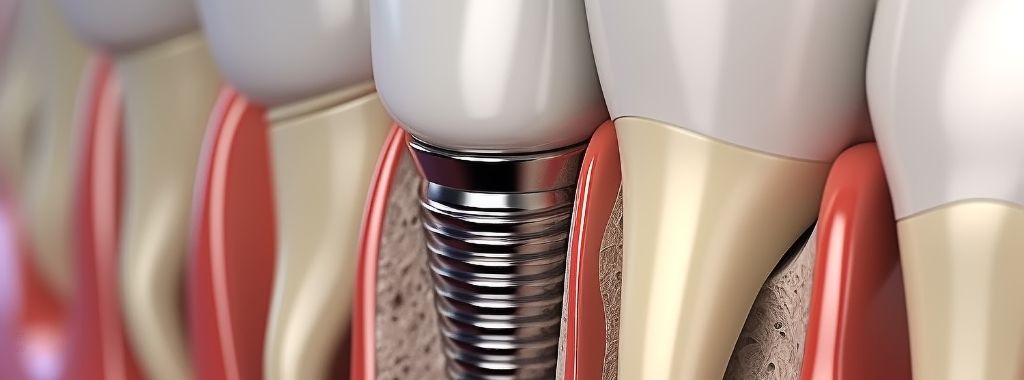
A dental implant is a small fixture placed in the jawbone to act as a replacement for the root of a missing tooth. After the implant has healed and become stable, a replacement tooth such as a crown, bridge, or another restoration can be attached depending on the treatment plan. An implant is not a natural tooth, but it can provide support for a fixed replacement when the patient’s condition is suitable.
A dental implant plan usually includes several parts: the implant fixture placed in the bone, the abutment that connects the implant to the restoration, and the crown or prosthetic tooth that appears in the mouth. The details may vary depending on the number of missing teeth, the location of the tooth, the quality of the bone and gums, and the type of restoration needed.
The aim of implant treatment is to replace missing teeth in a way that supports function and appearance. However, implants need careful planning because their long-term performance depends on several factors, including gum health, bone support, daily oral hygiene, the absence of active infection, bite force, and regular follow-up.
When May You Need Dental Implants?
The dentist may discuss dental implants when a patient has one or more missing teeth, especially if the space affects chewing, appearance, or the balance of nearby teeth. Dental implants may be considered in situations such as:
- A single missing tooth in a visible or important chewing area.
- More than one missing tooth with a need for a fixed replacement.
- A gap that may allow nearby teeth to shift over time.
- Difficulty chewing because of missing back teeth.
- The patient prefers not to prepare neighboring teeth for a bridge when implants are suitable.
- Discomfort with certain removable tooth replacement options.
- The need to support a bridge or larger restoration in some cases.
- A long-term tooth replacement plan based on the dentist’s assessment.
Dental implants are not the only option for replacing missing teeth. A dental bridge may be suitable in certain cases. Removable dentures or other solutions may be more practical for other patients. The dentist compares the available options based on oral condition, bone support, gum health, general health, and patient expectations.
Who Is a Suitable Candidate for Dental Implants?
A suitable candidate for dental implants is someone whose oral and general health can support implant placement and healing. The dentist needs to confirm that there is enough jawbone to support the implant, that the gums are healthy or stable, and that the patient can maintain good oral hygiene and attend follow-up visits.
Some patients need additional assessment before implant treatment. This may include patients with uncontrolled diabetes, active gum disease, heavy smoking, low bone volume, or certain medications that may affect bone healing. These factors do not always prevent implant treatment, but they require careful assessment, planning, and sometimes coordination with the patient’s medical doctor.
Timing is also important. Some patients may start implant treatment after a tooth has healed following extraction. Others may need to wait longer. Some patients need jawbone grafting or gum care first. There is no single timeline for all patients. The treatment plan is decided after examination and imaging.
Cases That May Not Be Suitable for Immediate Implant Placement
Implant treatment may not be suitable immediately if there is active gum infection, not enough bone, untreated decay in nearby teeth, or poor oral hygiene. If a patient cannot maintain daily care or attend follow-up visits, the risk of problems around the implant may increase over time.
Daily habits are also important. Smoking may affect tissue healing, while teeth grinding may place extra pressure on the implant or crown. In these situations, the dentist may recommend managing these factors before or after implant placement. This may include gum treatment, professional cleaning, a night guard when needed, or specific home care instructions.
If implants are not suitable at the first visit, it does not always mean they are impossible. The patient may need preparation first, such as gum treatment, bone grafting, or improving oral health before reassessment.
Steps of Dental Implant Treatment
The steps of dental implant treatment vary depending on the patient, the number of missing teeth, and the location of the implant. In general, the plan may include the following stages.
1. Examination and Diagnosis
The dentist starts by examining the mouth, teeth, gums, and missing tooth area. Nearby teeth, bite, gum condition, infection, decay, and oral hygiene are assessed. Dental imaging may be requested to check the jawbone and confirm whether there is enough space and support for an implant.
2. Treatment Planning
After assessment, the dentist explains the available options. This may include whether an implant is suitable, whether extraction is needed first, whether bone grafting is required, and the expected stages of treatment. Alternatives such as bridges or removable options may also be discussed depending on the case.
3. Preparing the Mouth Before Implant Placement
Some patients need preparation before implant placement. This may include
teeth cleaning, gum treatment, treating decay, extracting a damaged tooth, or jawbone grafting. This stage is important because implant treatment needs a healthy oral environment whenever possible.
4. Placing the Implant in the Jawbone
When the case is suitable, the implant is placed in the planned position in the jawbone. Local anesthesia is commonly used depending on the dentist’s assessment. After placement, the body needs time for the bone to heal around the implant.
5. Healing and Follow-Up
After implant placement, there is a healing period that varies from one patient to another. During this time, the dentist monitors healing and implant stability. The patient should follow aftercare instructions and avoid putting pressure on the area unless advised by the dentist.
6. Placing the Abutment and Crown
After healing is complete according to the dentist’s assessment, the abutment and final crown or restoration are placed. The dentist checks the shape, bite, and patient comfort. After placement, the patient receives instructions on how to clean around the implant and restoration.
Do Dental Implants Need Bone Grafting?
Not every implant case needs bone grafting. However, some patients may need jawbone grafting if there is not enough bone to support the implant. Bone loss can happen after a tooth has been missing for a long time, after infection, after complicated extraction, or for other reasons. The dentist assesses whether bone support is enough before planning implant placement.
Jawbone grafting can be an important preparation stage for some patients because it may help create better support for the implant. The decision depends on examination and imaging. If bone grafting is needed, the dentist explains the procedure, healing time, and when implant placement may be considered.
Dental Implants vs. Dental Bridges
Dental implants and dental bridges can both replace missing teeth, but they work differently. An implant is placed in the jawbone and supports a crown or restoration. A bridge usually uses neighboring teeth as supports, and these teeth may need to be prepared to hold the bridge.
Implants may be suitable for patients who want to replace a missing tooth without preparing nearby teeth, provided that the bone and gums are suitable. A bridge may be suitable when implants are not the best option or when neighboring teeth already need crowns. There is no single best choice for every patient. The decision depends on oral health, bone condition, gum condition, patient needs, and treatment expectations.
The dentist explains the advantages and limitations of each option after examination. In some cases, an implant may be the preferred option. In other cases, a bridge or removable replacement may be more suitable.
Replacing One Tooth or Several Teeth with Implants
Dental implants can be used to replace one tooth or to support a restoration for several missing teeth. If one tooth is missing, one implant and one crown may be used when the case is suitable. If several teeth are missing, the patient may not always need one implant for every missing tooth. A planned number of implants may support a bridge or another fixed restoration depending on the case.
The number of implants needed depends on the location of the missing teeth, bone support, chewing pressure, gum condition, and the type of restoration planned. This is why treatment planning should be based on full assessment, not only on the number of missing teeth.
Are Dental Implants Painful?
Dental implant placement is usually performed under local anesthesia depending on the case. The aim is to reduce pain during the procedure. The patient may feel pressure or mild discomfort during treatment. After the anesthesia wears off, some pain, swelling, or sensitivity may appear in the area. The experience varies depending on the number of implants, implant location, case difficulty, and whether additional procedures such as bone grafting are needed.
After the procedure, the dentist gives aftercare instructions and may recommend medication depending on the patient’s condition. If pain becomes worse instead of improving, or if severe swelling, continuous bleeding, unpleasant smell, discharge, or implant movement occurs, the patient should contact the dentist. Early review helps manage concerns before they become more complicated.
Aftercare After Dental Implant Placement
Aftercare is important because it supports healing and may reduce the risk of complications. Instructions vary from one patient to another, but general tips may include:
- Follow the dentist’s instructions after the procedure.
- Avoid strong pressure on the implant area at the beginning.
- Eat soft foods during the first period if recommended.
- Avoid smoking because it may affect healing.
- Clean the mouth gently as instructed by the dentist.
- Avoid touching the implant area with your tongue or fingers.
- Attend follow-up appointments.
- Contact the clinic if severe pain, swelling, or bleeding continues.
After the final crown is placed, the implant area should be treated as an important part of the mouth that needs daily care. Cleaning around the implant and crown is essential to support gum health and reduce plaque buildup.
Long-Term Care for Dental Implants
Long-term implant success does not depend only on placement. It also depends on daily care and regular follow-up. Patients should brush twice daily, clean between the teeth, and use tools recommended by the dentist to clean around the implant. Professional cleaning and dental checkups should be maintained according to the dentist’s advice.
Inflammation can develop around implants if plaque builds up around them, similar to gum problems around natural teeth. Patients should not ignore bleeding, swelling, pain, bad smell, or gum changes around an implant. They should also contact the dentist if the crown feels loose or the bite feels different.
If the patient grinds their teeth at night, the dentist may discuss using a night guard to reduce pressure on the implant crown. Avoiding the use of teeth to break hard objects also helps protect the restoration.
Risks and Important Notes Before Dental Implants
Dental implant treatment is a medical procedure that needs planning and assessment. Like any surgical procedure, possible risks may include infection at the implant site, bleeding, swelling, pain, or failure of the implant to integrate with the bone. In some cases, special planning is needed because of nearby nerves or sinus areas, especially in specific locations in the upper or lower jaw.
These risks do not mean implants are unsafe for everyone. They mean that patients should understand that results vary from one case to another, and that aftercare and follow-up are important parts of treatment. Patients should tell the dentist about chronic medical conditions, regular medication, allergies, smoking, and previous oral surgery experiences before starting implant treatment.
Dental Implants After Tooth Extraction
Some patients consider dental implants after removing a damaged tooth. The timing of implant placement after extraction depends on the bone condition, gum condition, and whether infection is present. Some cases require waiting for healing. Some cases may need bone grafting. Other cases may be planned differently based on the dentist’s assessment.
If the tooth to be removed is important for the smile or chewing, it is useful to discuss the replacement plan before or during extraction planning. Early planning helps the patient understand whether implants are suitable, what the expected timeline may be, and whether a temporary replacement is needed during healing.
Dental Implants for Older Adults
Age alone does not prevent dental implant treatment. General health, oral health, jawbone support, gum condition, and the ability to maintain oral hygiene are more important. Some older adults may be suitable candidates for implants if their health is stable and they can attend follow-up visits. Other patients may have medical factors or medications that require additional assessment.
Each patient is assessed individually. The dentist reviews medical history, medications, previous surgeries, oral hygiene ability, and dental needs. In some cases, a removable replacement or bridge may be simpler. In other cases, implants may be suitable.
Dental Implants and Smile Appearance
Dental implants may improve smile appearance when they replace missing teeth, but they are mainly a restorative treatment designed to replace function and support oral health. Appearance is important, especially for front teeth, but the dentist also considers gum health, bone support, bite, and long-term stability.
When planning an implant in the front area, the dentist considers crown color, gum shape, spacing, and smile line. For back teeth, chewing function and pressure distribution may be the main focus. Priorities vary depending on tooth location and patient needs.
Dental Implants as Part of Dental Treatment Services
Dental implants are connected to several other services in the dental treatment category. Before implant placement, the patient may need dental X-rays and examination, damaged tooth extraction, gum care, teeth cleaning, or jawbone grafting. After implant placement, the patient may need a crown or bridge supported by implants depending on the number of missing teeth.
Connecting these services helps patients understand the full treatment journey, from assessing the gap to placing the final restoration. It also shows that implant treatment is not a separate single step. It is part of a treatment plan based on the full condition of the mouth.
Why Choose Basmat Al Hayat Medical Center for Dental Implants?
At Basmat Al Hayat Medical Center, dental implant treatment starts with a clear assessment, not a direct recommendation without examination. The dentist checks the teeth, gums, missing tooth area, and X-rays when needed. The available options are then explained, including implants, bridges, or other solutions depending on the patient’s condition.
The service is available at our Muwailih – Sharjah and Ras Al Khaimah branches, making it easier for patients to choose the nearest location. Having other dental treatment services available at the center also helps complete the plan if the patient needs extraction, fillings,
root canal treatment, teeth cleaning, jawbone grafting, crowns, or bridges based on the dentist’s assessment.
Basmat Al Hayat Medical Center Branches
Muwailih Branch – Sharjah
Sheikh Khalifa Street, Muwailih Commercial
Customer Service: 065597444
Reception: 0544449500
Working Hours: Saturday to Thursday, 9:00 AM to 9:00 PM
Ras Al Khaimah Branch
Al Dhait Area – Agencies Street
Customer Service: 072222256
Reception: 0506462004
Working Hours: Saturday to Thursday, 9:00 AM to 9:00 PM
Friday: 12:00 PM to 8:00 PM
Booking a Dental Implants Appointment
If you have a missing tooth or a gap that affects chewing or smile appearance, you can contact Basmat Al Hayat Medical Center to arrange a dental examination at our Muwailih or Ras Al Khaimah branch. After examination and X-rays when needed, the dentist will explain whether dental implants are suitable for your condition and whether you need jawbone grafting or any preparation before starting.
Dental Implants FAQ
Are dental implants suitable for everyone?
Dental implants are not suitable for every patient immediately. The dentist needs to assess gum health, jawbone support, general health, and daily oral care before confirming whether implants are suitable.
Are dental implants painful?
Implant placement is usually performed under local anesthesia to reduce pain during the procedure. Mild pain, swelling, or discomfort may happen afterward depending on the case.
How long does dental implant treatment take?
The timeline varies depending on the number of implants, bone condition, need for bone grafting, and healing time. Some cases require several stages before the final crown is placed.
Do I need bone grafting before dental implants?
Not always. Some patients need bone grafting if there is not enough jawbone to support the implant. This is confirmed after examination and imaging.
What is the difference between an implant and a bridge?
An implant uses a fixture placed in the jawbone to support a replacement tooth. A bridge usually depends on neighboring teeth for support. The dentist recommends the suitable option after assessment.
Can implants be placed immediately after extraction?
This depends on tooth condition, bone support, gum health, and whether infection is present. Some cases need healing or bone grafting before implant placement.
How do I care for dental implants after placement?
You should brush daily, clean around the implant using suitable tools, attend regular checkups, and avoid smoking or heavy pressure on the crown when advised by the dentist.