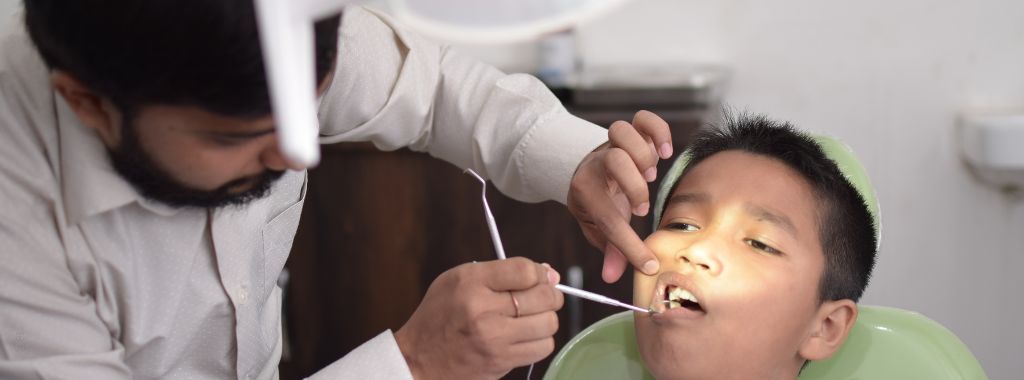
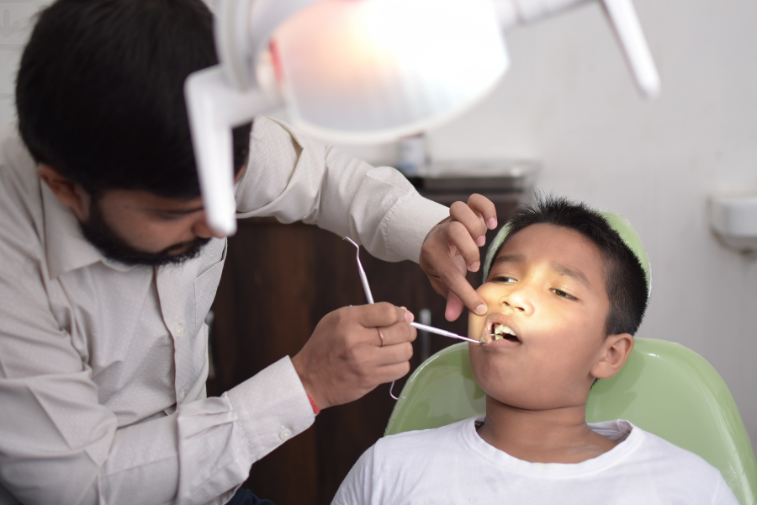
Pediatric Dental Treatment in Muwailih and Ras Al Khaimah
Pediatric dental treatment needs a different approach from adult dental care. A child does not only need treatment for the affected tooth. The child also needs a calm and positive dental experience that helps reduce fear and builds trust with the dentist. Children’s teeth are still developing, and they go through several stages, from baby teeth to mixed teeth and then permanent teeth. During these stages, children may experience cavities, tooth pain, plaque buildup, gum irritation, delayed baby tooth loss, early permanent tooth eruption, or dental injuries that need careful assessment.
At Basmat Al Hayat Medical Center, we provide pediatric dental treatment as part of our dental treatment services at our Muwailih – Sharjah and Ras Al Khaimah branches. The visit starts with a child-friendly dental examination. The dentist checks the teeth and gums, explains the findings to the parents, and recommends the suitable treatment based on the child’s age, cooperation, symptoms, and dental condition. The plan may include a routine checkup, professional cleaning,
baby tooth decay treatment, dental fillings, fluoride protection, X-rays when needed, or deeper treatment if decay has reached the inner part of the tooth.
The goal of pediatric dental care is not only to stop current pain. It is also to protect baby and permanent teeth, guide the child toward healthy habits, and help parents understand brushing, diet, and prevention. Every child is different, so the treatment plan is decided after examination, not only based on age or the appearance of the tooth.
What Is Pediatric Dental Treatment?
Pediatric dental treatment includes dental care services designed for children from the time baby teeth appear until the development of permanent teeth. It is not limited to treating cavities. It also includes prevention, regular checkups, monitoring tooth development, treating pain, caring for the gums, teaching children how to brush, and guiding parents about habits that affect oral health.
A child may need a simple service such as cleaning or fluoride application. Another child may need a filling if decay is present. Some children may need pulp treatment, baby tooth extraction, or dental X-rays when the dentist needs to understand the cause of pain or the position of permanent teeth. The right service depends on the child’s condition.
Dental care for children should be gentle, gradual, and reassuring. Some children visit the dentist for the first time when they already have pain, which may make them more nervous. When possible, the first visit can be focused on examination, introduction, and prevention. This can help the child become more comfortable before any treatment is needed.
Why Are Baby Teeth Important?
Some parents believe that baby teeth do not need treatment because they will fall out later. However, baby teeth have important roles. They help children chew food, speak clearly, smile comfortably, and keep space for permanent teeth. If a baby tooth is lost too early because of decay or infection, nearby teeth may shift and affect the space needed for the permanent tooth.
Cavities in baby teeth can cause pain, difficulty eating, poor sleep, and infection. In some cases, untreated infection may affect the gums or the developing permanent tooth underneath. This is why baby tooth decay should not be ignored. Treating baby teeth at the right time can help keep the child comfortable and protect the mouth during growth.
Baby tooth care starts when the first teeth appear. Children need age-appropriate brushing, reduced sugary snacks and drinks, and avoidance of sleeping with milk, juice, or sweet drinks in the mouth. Regular dental checkups help detect early decay before it becomes painful or more difficult to treat.
When Should a Child Visit the Dentist?
A child should visit the dentist early, around the time the first teeth appear or during the first year of life. After that, the dentist recommends follow-up timing based on the child’s dental condition and risk of cavities. An early visit does not always mean major treatment. It often helps parents learn how to clean the child’s teeth, how much toothpaste to use, how to manage feeding habits, and how to prevent early childhood tooth decay.
You should book a dental visit for your child if you notice any of the following signs:
- Tooth pain or crying while eating.
- Sensitivity to cold or hot drinks.
- White, brown, or dark spots on the teeth.
- A visible cavity or hole in a tooth.
- Frequent bad breath.
- Gum bleeding or swelling.
- A broken tooth after a fall or injury.
- A baby tooth that does not fall out when a permanent tooth appears behind it.
- Swelling in the gum or face.
- Difficulty chewing or avoiding food on one side.
These signs do not always mean that treatment will be complicated. Early examination can help identify the problem before it becomes more serious. In many cases, treatment may be simpler when decay is found early. Delaying treatment may allow the cavity to reach deeper layers of the tooth.
What Happens During a Child’s Dental Visit?
The visit usually starts with getting the child comfortable. The dentist may talk to the child, explain the chair and instruments in simple words, and perform the examination slowly. If the child is very young, the parent may help during the examination, especially during the first visit.
After examining the mouth, the dentist explains the condition to the parents. This may include whether cavities are present, whether the child needs cleaning, whether X-rays are needed, and what treatment options are suitable. The plan depends on the child’s age, cooperation, depth of the problem, and number of affected teeth.
Parents can help by preparing the child in a calm way. It is better not to use fear-based words or describe injections, pain, or previous negative experiences. Simple phrases such as “we are going to check your teeth” or “the dentist will help keep your teeth healthy” are usually more helpful.
Dental Checkups for Children
Regular dental checkups help detect problems early. During the checkup, the dentist examines baby teeth, permanent teeth that have erupted, gums, bite, decay, stains, plaque buildup, and the child’s need for cleaning or preventive care. The dentist may also ask parents about brushing routine, toothpaste use, sugar intake, night feeding, and any habits such as thumb sucking or prolonged pacifier use.
Dental X-rays may be needed if decay is not visible from the outside, if the child has pain with no clear cause, or if the dentist needs to check permanent tooth development. X-rays are not requested randomly. They are used when they can help diagnosis or treatment planning.
A dental checkup is not only for children who have pain. Many cavities in children start quietly. They may first appear as white spots, color changes, or small areas between teeth. Regular visits make it easier to manage problems before they become painful.
Baby Tooth Decay Treatment
Baby tooth decay is one of the most common dental problems in children. It may start as a white spot or mild discoloration and later become a hole, pain, or infection if not treated. The treatment depends on the size of the cavity, tooth location, and whether decay is close to the nerve.
If decay is small or moderate, the dentist may remove the damaged part and place a suitable filling. If decay is deep and reaches the inner part of the tooth, the child may need pulp treatment or another plan. If the tooth is badly damaged and cannot be restored, extraction may be discussed with the parents, along with the possible effect on permanent teeth and space maintenance if needed.
The goal is to stop the cavity from progressing, reduce pain, and help the child chew and sleep comfortably. Parents also receive guidance on how to reduce the chance of new cavities, because treating the tooth alone is not enough if the same habits continue.
Dental Fillings for Children
Dental fillings for children are used to repair a tooth after decay has been removed. A filling may be needed in a baby tooth or a permanent tooth when decay has damaged part of the tooth structure. The type of filling and treatment approach depend on the child’s age, cavity size, tooth location, and cooperation during treatment.
Some children are afraid of fillings because they do not know what will happen. A calm explanation can reduce anxiety. The dentist may explain that the tooth will be cleaned and repaired so the child can eat more comfortably. Parents receive aftercare instructions, such as when the child can eat and what to watch for after treatment.
A filling does not stop future decay if daily care does not improve. The child still needs brushing, a suitable diet, and regular checkups.
Teeth Cleaning for Children
Some children need professional
teeth cleaning if plaque, tartar, or surface stains are present. Cleaning may help support gum health, reduce bad breath, and allow the dentist to see the teeth more clearly. Not every child needs deep cleaning, but some children may need gentle cleaning or removal of deposits based on examination.
After cleaning, parents receive guidance on home care. Younger children usually cannot brush effectively on their own. They need help from parents until they develop better brushing skills. Using an age-appropriate toothbrush, a suitable amount of toothpaste, and a regular morning and bedtime routine can help children build healthier habits.
Fluoride Protection for Children
Fluoride may help strengthen tooth surfaces and reduce the risk of cavities in some children, especially when the child has a higher risk of decay. The dentist decides whether fluoride protection is suitable after examining the teeth, checking the child’s age, and reviewing daily oral care habits.
Fluoride may be applied at the clinic in a suitable way. The dentist may also recommend fluoride toothpaste and explain how much should be used for the child’s age. Young children should not use large amounts of toothpaste because they may swallow it. Parents should follow the dentist’s or pediatrician’s advice about toothpaste amount and brushing supervision.
Fluoride is not a replacement for brushing or reducing sugar intake. It is part of prevention and works best with good daily habits and regular dental checkups.
Tooth Pain in Children
Tooth pain in children may be caused by cavities, pulp infection, a broken tooth, gum irritation, trapped food, or a new tooth erupting. Parents should not rely only on pain medicine without a dental examination, because the pain may return if the cause is still present.
During the visit, the dentist identifies the source of pain. A small cavity may need a filling. Deeper decay may need pulp treatment. A tooth that cannot be restored may need extraction. In some cases, the pain may be related to gum inflammation or the eruption of a permanent tooth, and the child may only need cleaning, monitoring, or home care guidance.
If the child has facial swelling, fever, difficulty opening the mouth, or severe pain that prevents eating or sleeping, medical assessment should not be delayed. These signs may indicate infection that needs proper care.
First Permanent Teeth in Children
Permanent teeth begin to erupt during childhood. One of the most important teeth is the first permanent molar, which often appears behind the baby teeth. Some parents think this tooth is a baby tooth because it appears at a young age, but it is permanent and needs careful protection.
These molars have grooves that can collect food and plaque, making them more likely to develop cavities if they are not cleaned well. The dentist can assess them and may discuss preventive options such as fluoride or sealants depending on the child’s condition and service availability.
Teaching children to brush the back teeth is very important. Many children focus on the front teeth and miss the molars. Parents should supervise brushing until the child can clean all areas properly.
Daily Habits That Affect Children’s Teeth
Several daily habits can increase the risk of cavities in children. These include frequent sugary snacks, juice, sweet drinks, sleeping after milk or juice without cleaning the teeth, using a pacifier with sweet substances, and not brushing before bedtime. The frequency of sugar exposure can be more harmful than the amount because the teeth are exposed to acids many times during the day.
Other habits may affect tooth position and bite, such as thumb sucking or long-term pacifier use. These habits do not always cause problems, but if they continue for a long time, the dentist may need to monitor the bite and guide the parents.
The goal is not to ban every food the child enjoys. The goal is to organize habits. Sugary snacks are better limited to certain times instead of being eaten throughout the day, and children should drink water and brush regularly.
Home Care for Children’s Teeth
Home care is the foundation of children’s oral health. Children should brush twice daily, especially before bedtime. A soft toothbrush suitable for the child’s age should be used, along with a suitable amount of toothpaste as advised by the dentist. Young children need help from parents because they do not have the skill to clean every tooth surface properly.
When teeth touch each other, cleaning between them may be needed using floss or another suitable tool with parental help. Sugary snacks and drinks should be limited, and water should be encouraged. If the child drinks milk at night, parents should ask the dentist about ways to reduce the risk of early tooth decay.
Making brushing part of the family routine can help. When children see their parents brushing, they are more likely to accept the habit.
Managing Dental Fear in Children
Dental fear is common in children, especially when the first visit happens because of pain. Fear can be reduced through early visits, simple language, and avoiding threats such as “if you do not brush, we will take you to the dentist.” Parents should also avoid sharing negative dental experiences in front of the child.
At the clinic, calm communication and age-appropriate explanation can help build trust. Some children need more time to adjust. If the situation allows, treatment may be divided into more than one visit. Parent cooperation is important because a calm parent can help the child feel safer.
If the child is very anxious or has difficulty staying still, the dentist explains the suitable options based on the child’s age, cooperation, and treatment need. The aim is to provide care in a safe and respectful way.
Dental Injuries in Children
Children may fall or get hit during play, leading to a broken tooth, loose tooth, gum bleeding, or a tooth moving out of place. In these cases, parents should contact a dentist as soon as possible, especially if the affected tooth is permanent, or if there is severe pain, swelling, or difficulty closing the mouth.
Dental injuries should not be ignored even if the child seems fine. Some effects appear later, such as tooth discoloration, pain, or infection. The dentist examines the tooth and gums and may request an X-ray when needed. Treatment depends on whether the tooth is baby or permanent and on the type and severity of the injury.
Pediatric Dental Treatment as Part of Dental Treatment Services
Pediatric dental treatment is connected to several other services in the dental treatment category. A child may need baby tooth decay treatment, fluoride protection, dental fillings, teeth cleaning,
dental X-ray and examination, or simple extraction depending on the case. The visit may also be an opportunity to guide parents about diet, brushing, and follow-up timing.
Internal linking between these services helps parents understand the full care journey from examination to prevention and treatment. It also shows that pediatric dentistry is not only about treating pain. It is ongoing care for the child’s oral development and dental health.
Why Choose Basmat Al Hayat Medical Center for Pediatric Dental Treatment?
At Basmat Al Hayat Medical Center, we aim to provide child-friendly dental care in a calm and clear way. The visit starts with examining the child’s condition, then explaining the plan to the parents in simple language. Treatment is recommended based on the child’s age, the level of decay or pain, and the child’s ability to cooperate. Home care guidance is also important because long-term oral health depends on daily habits after treatment.
Pediatric dental treatment is available at our Muwailih – Sharjah and Ras Al Khaimah branches, making it easier for parents to choose the nearest location. Having other dental treatment services available at the center also supports the child’s care plan if X-rays, cleaning, fillings, fluoride, or baby tooth decay treatment are needed based on the dentist’s assessment.
Basmat Al Hayat Medical Center Branches
Muwailih Branch – Sharjah
Sheikh Khalifa Street, Muwailih Commercial
Customer Service: 065597444
Reception: 0544449500
Working Hours: Saturday to Thursday, 9:00 AM to 9:00 PM
Ras Al Khaimah Branch
Al Dhait Area – Agencies Street
Customer Service: 072222256
Reception: 0506462004
Working Hours: Saturday to Thursday, 9:00 AM to 9:00 PM
Friday: 12:00 PM to 8:00 PM
Booking a Pediatric Dental Treatment Appointment
If your child has tooth pain, cavities, sensitivity, bad breath, or needs a routine dental checkup, you can contact Basmat Al Hayat Medical Center to arrange an appointment at our Muwailih or Ras Al Khaimah branch. After examination, the dentist will explain the condition and whether your child needs treatment or preventive follow-up only.
Pediatric Dental Treatment FAQ
When should my child first visit the dentist?
It is best for the first dental visit to happen early, when the first teeth appear or during the first year of life. The dentist will then recommend follow-up timing based on the child’s condition and cavity risk.
Do baby teeth need treatment?
Yes. Baby teeth help with chewing, speech, and keeping space for permanent teeth. Untreated decay may cause pain, infection, or early tooth loss.
Are dental fillings necessary for children?
Fillings may be needed if decay has damaged part of the tooth. The dentist decides after examination based on the depth of decay, tooth condition, and the child’s age.
Is fluoride suitable for children?
Fluoride may be suitable for some children to help reduce cavity risk. The dentist decides the type and use based on the child’s age and dental condition.
What should I do if my child is afraid of the dentist?
Speak calmly and avoid scary words. The first visit can start with a simple checkup and introduction to the clinic. The dentist will choose a suitable approach based on the child’s behavior and needs.
Do children need dental X-rays?
Children may need X-rays if the dentist needs to check hidden decay, unclear pain, an injury, or permanent tooth development. X-rays are requested only when needed.
How can I protect my child’s teeth from cavities?
Help your child brush twice daily, limit frequent sugary snacks and drinks, avoid bedtime sweet drinks, and follow the dentist’s checkup schedule.
When is a child’s toothache urgent?
Severe pain, facial or gum swelling, fever, or difficulty eating or sleeping should be checked as soon as possible.