Root Canal Treatment in Muwailih and Ras Al Khaimah
Root Canal Treatment in Muwailih and Ras Al Khaimah
Root canal treatment is an important dental service used when the inner part of the tooth becomes inflamed, infected, or damaged. Many patients first notice repeated tooth pain, strong sensitivity to hot or cold drinks, or discomfort when chewing. In some cases, the pain becomes continuous or swelling appears around the tooth. At Basmat Al Hayat Medical Center, we provide root canal treatment as part of our dental treatment services at our Muwailih – Sharjah and Ras Al Khaimah branches.
The purpose of root canal treatment is to clean the inner canals of the tooth, remove inflamed or damaged tissue, and seal the canals in a suitable way. The aim is to help preserve the natural tooth whenever possible instead of removing it. The dentist starts with a clinical examination and may request dental X-rays to understand the depth of decay, the condition of the roots, and whether the nerve is affected.
This page explains when root canal treatment may be needed, how the procedure is usually done, the difference between a dental filling and root canal treatment, and what patients should know before and after treatment. The information is for patient education only. The final treatment decision is made after examination and assessment by the dentist.
What Is Root Canal Treatment?
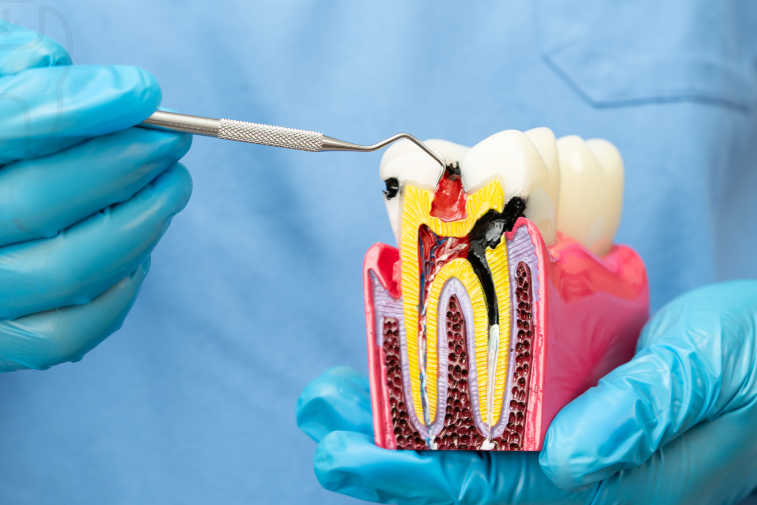
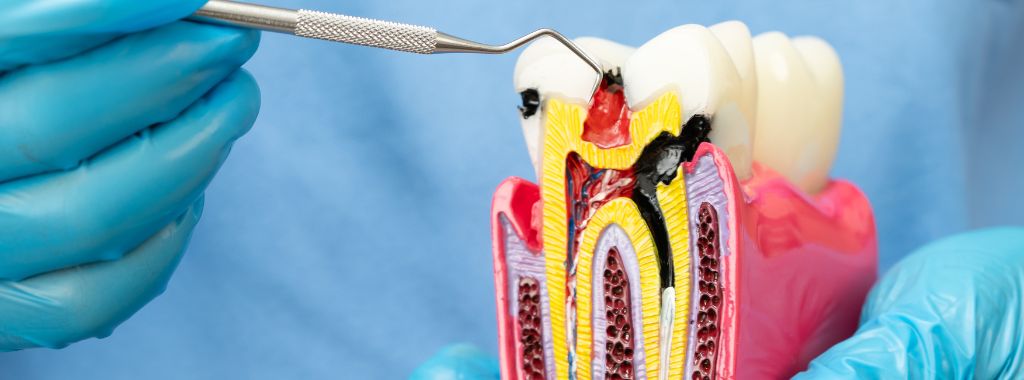
Root canal treatment is a dental procedure used when decay, infection, or trauma reaches the pulp of the tooth. The pulp is the inner part of the tooth that contains nerves and blood vessels. When this area becomes infected or damaged, the patient may feel strong pain, long-lasting sensitivity, pain while chewing, or swelling near the affected tooth.
During the procedure, the dentist opens the tooth to reach the internal canals. The damaged or infected tissue is removed, and the canals are cleaned and shaped using special dental tools. After cleaning, the canals are filled and sealed. The tooth may then need a permanent filling or a crown depending on how much of the natural tooth structure remains.
Root canal treatment does not mean removing the tooth. In fact, its main goal is to help keep the natural tooth when the case is suitable. However, the treatment plan depends on several factors, including the level of damage, the root condition, gum health, and how early the patient starts treatment.
When Do You Need Root Canal Treatment?
The dentist may recommend root canal treatment when decay is deep or when infection reaches the inner part of the tooth. Common signs that may require a dental examination include:
- Strong or continuous tooth pain, especially at night or while chewing.
- Long-lasting sensitivity to hot or cold drinks.
- Pain when pressing on the tooth or closing the mouth.
- Deep decay or a broken tooth.
- Swelling in the gum around the affected tooth.
- Change in tooth color compared with nearby teeth.
- A small bump or abscess near the tooth.
- Pain that returns after an old filling or previous dental treatment.
Having one of these signs does not always mean that root canal treatment is required. Similar symptoms may happen with simple decay, gum inflammation, tooth sensitivity, or a damaged filling. This is why examination and X-rays are important to identify the cause and choose the suitable treatment.
Dental Filling vs. Root Canal Treatment
A dental filling is usually used when decay affects the outer layers of the tooth and has not reached the nerve. The dentist removes the decayed part, cleans the area, and places a suitable filling. Root canal treatment is different because it is needed when the damage reaches the pulp or root canals. In this case, a normal filling alone may not be enough because the source of pain or infection is inside the tooth.
Some patients visit the clinic thinking they only need a filling. After examination and X-rays, the dentist may find that the decay is deep and close to the nerve, or that it has already reached the pulp. The dentist then explains why root canal treatment may be recommended and whether the tooth will need additional restoration after the canals are cleaned.
The decision is not based on pain alone. Some teeth with deep decay may not cause severe pain at the beginning, while some sensitivity cases can feel uncomfortable but may not require root canal treatment. Proper diagnosis is the first and most important step.
How Is Root Canal Treatment Done?
The steps may vary depending on the tooth condition, the number of canals, and the level of infection. In general, root canal treatment may include the following stages:
1. Examination and Diagnosis
The dentist starts by asking about the type of pain, when it happens, and whether it becomes worse with chewing or hot and cold drinks. The tooth and gums are examined, and dental X-rays may be requested to check the depth of decay, the root shape, and the bone around the tooth. This helps the dentist decide whether root canal treatment is suitable or whether another treatment option is needed.
2. Local Anesthesia When Needed
In most cases, local anesthesia is used before treatment to reduce discomfort. The dentist decides the suitable approach based on the patient’s condition and pain level. If the tooth has severe inflammation, additional steps may be needed before or during treatment depending on the case.
3. Accessing the Inner Canals
After preparing the tooth, the dentist creates a small opening to reach the pulp and root canals. This allows the dentist to clean the internal area that contains inflamed or damaged tissue.
4. Cleaning the Root Canals
The canals are cleaned using special dental instruments to remove bacteria and damaged tissue. The number of canals varies from one tooth to another. Front teeth often have fewer canals, while molars may have several canals and may require more time and precision.
5. Shaping and Preparing the Canals
After cleaning, the dentist shapes the canals so they can be filled properly. The aim is to reduce internal spaces and seal the canals as well as possible. In some cases, the dentist may place temporary material between visits if the tooth needs follow-up.
6. Filling the Canals and Restoring the Tooth
Once the canals are ready, they are filled with a suitable material and the tooth is closed with a temporary or permanent filling depending on the treatment stage. If the tooth is weak or has lost a large part of its structure, the dentist may recommend a crown to protect it and support chewing function.
Can Root Canal Treatment Be Done in One Visit?
Root canal treatment may be completed in one visit in some cases, while other cases may require more than one visit. This depends on the type of tooth, number of canals, level of infection, presence of an abscess, and the restoration needed after treatment. Some teeth need more time because the canals are complex or because there is an old infection.
Patients should not compare their treatment with someone else’s experience. Every tooth has a different condition. The dentist will explain the expected number of visits after examination, and the plan may change if additional details appear during treatment.
Is Root Canal Treatment Painful?
Many patients worry about root canal treatment because of old experiences or inaccurate information. Usually, treatment is performed under local anesthesia, and the purpose is to remove the source of pain caused by the infected nerve. The patient may feel some pressure or mild discomfort during the procedure, and mild sensitivity or pain may happen after the visit, especially if the tooth was already inflamed.
If pain continues after treatment or becomes stronger, the patient should contact the dentist for review. Sometimes the tooth may need bite adjustment, follow-up of infection, or completion of the final restoration. Follow-up after root canal treatment is important for maintaining the result.
What Happens If Root Canal Treatment Is Delayed?
Delaying the examination of an affected tooth may allow decay or infection to spread further. In some cases, infection may reach the root area or the surrounding bone, and swelling or an abscess may appear. The longer treatment is delayed, the more difficult it may become to save the natural tooth, and more complex procedures may be needed.
This does not mean that every toothache is dangerous. However, early examination helps identify the cause before the condition becomes more complicated. If you have continuous pain, strong sensitivity, or swelling, it is better to book a dental checkup instead of depending on painkillers for a long time.
Aftercare After Root Canal Treatment
After root canal treatment, the tooth needs proper care so it can continue to function. The treated tooth may be weaker than before, especially if a large part was lost due to decay or fracture. The dentist will provide instructions based on your case and may recommend follow-up or a crown if needed.
General aftercare tips may include:
- Avoid strong pressure on the treated tooth until the final restoration is completed.
- Follow the dentist’s instructions for any prescribed medication.
- Contact the dentist if severe pain, swelling, or a high filling occurs.
- Brush and clean between your teeth daily.
- Do not ignore a temporary filling if it breaks or falls out.
- Complete the permanent filling or crown appointment if recommended.
- Keep regular dental checkups to maintain oral health.
Aftercare is just as important as the treatment itself. A root canal treated tooth still needs protection from new decay and heavy pressure, especially molars that carry more chewing force.
When Does a Tooth Need a Crown After Root Canal Treatment?
Not every tooth needs a crown after root canal treatment, but some cases benefit from additional protection. If the tooth has lost a large part of its structure due to decay or fracture, a filling alone may not provide enough support in the long term. Back teeth may especially need extra protection because they carry strong chewing pressure.
The dentist decides whether a crown is needed after evaluating the remaining tooth structure, tooth position, bite force, and the patient’s overall dental condition. The purpose of a crown is to support the tooth and help it function properly, not only to improve appearance.
Root Canal Treatment for Children
Some children may need pulp or nerve treatment in baby teeth or permanent teeth depending on age and tooth condition. Baby tooth decay, if left untreated, may cause pain, infection, or difficulty eating. This is why children should have dental examinations when pain, swelling, or visible decay appears.
Treatment for children is different from adult treatment and depends on the type of tooth, the child’s age, and how much the pulp is affected. At Basmat Al Hayat Medical Center, the child is assessed in an age-appropriate way, and the plan is explained clearly to the parents. The plan may include decay treatment, fillings, pulp treatment, or preventive follow-up depending on the case.
How to Reduce the Risk of Needing Root Canal Treatment
Not all dental problems can be prevented, but daily oral care and regular dental checkups help detect decay early before it reaches the nerve. Important steps include brushing twice a day, cleaning between the teeth, reducing sugary snacks and drinks, visiting the dentist when pain or sensitivity appears, and having teeth cleaning when recommended.
If you have old fillings, crowns, or a tooth that was previously fractured, follow-up is important to check for leakage, cracks, or new decay around the edges. Many nerve problems start as small decay or a weak restoration and become worse over time.
Root Canal Treatment as Part of Dental Treatment Services
Root canal treatment is connected to several other services in the dental treatment category. A patient may need dental X-rays and examination before diagnosis, a filling after canal cleaning, a crown to protect the tooth, or teeth cleaning as part of general oral care. For this reason, this page should be linked internally to dental fillings, root canal cleaning, dental crowns and bridges, and teeth cleaning.
Having these services connected helps patients understand the full treatment journey from examination to final restoration. It also helps search engines understand the relationship between this page and other dental service pages on the website.
Basmat Al Hayat Medical Center Branches
Muwailih Branch – Sharjah
Sheikh Khalifa Street, Muwailih Commercial
Customer Service: 065597444
Reception: 0544449500
Working Hours: Saturday to Thursday, 9:00 AM to 9:00 PM
Ras Al Khaimah Branch
Al Dhait Area – Agencies Street
Customer Service: 072222256
Reception: 0506462004
Working Hours: Saturday to Thursday, 9:00 AM to 9:00 PM
Friday: 12:00 PM to 8:00 PM
Booking a Root Canal Treatment Appointment
If you have continuous tooth pain, strong sensitivity, gum swelling, or deep decay, you can contact Basmat Al Hayat Medical Center to arrange a dental examination at our Muwailih or Ras Al Khaimah branch. After examination and X-rays when needed, the dentist will explain the cause of pain and whether root canal treatment is suitable for your condition.
Root Canal Treatment FAQ
Is root canal treatment painful?
Root canal treatment is usually performed under local anesthesia. The aim is to remove the source of pain. Mild discomfort or sensitivity may happen after the visit, depending on the tooth condition.
How many visits does root canal treatment need?
The number of visits depends on the tooth type, number of canals, and level of infection. Some cases may be completed in one visit, while others need more than one visit.
Can the tooth be saved instead of extracted?
In many cases, root canal treatment can help preserve the natural tooth if the tooth structure and roots are suitable. The decision is made after examination and X-rays.
Do I need a crown after root canal treatment?
Some patients may need a crown if the tooth is weak or has lost a large part of its structure. The dentist will confirm this after assessing the treated tooth.
What happens if I do not treat an infected nerve?
Pain may continue, and infection may spread to the root or surrounding tissues. Swelling or an abscess may appear in some cases, so examination is recommended when pain continues.
Is root canal treatment suitable for children?
Some children may need pulp treatment depending on the tooth type and level of decay. The treatment plan is decided after examining the child and explaining the options to the parents.